
In recent years, Pakistan’s sovereignty has increasingly come under question, as political shifts and strategic decisions have drastically altered the nation’s independent stance. Once a country determined to maintain its autonomy in foreign affairs, Pakistan now finds itself entangled in alliances and commitments that suggest its sovereignty was quietly put up for sale. But who exactly bought it, and what price did Pakistan pay?
Back in 2021, when Saudi Arabia extended a mutual defence pact to Pakistan and the United States proposed setting up a drone base on Pakistani soil, then-Prime Minister Imran Khan firmly refused both offers. Khan saw these moves as dangerous red lines—agreements that would drag Pakistan into foreign conflicts and erode what remained of its strategic independence. For him, maintaining neutrality was not just policy; it was a safeguard against becoming a pawn in global power plays.
However, Khan’s resistance created friction with powerful military elites and international stakeholders. His decision to keep close ties with Russia at a time when the US condemned Moscow for its actions in Ukraine further alienated Washington. When Pakistan abstained from the UN vote condemning Russia, it marked Khan as a formidable opponent to US interests. The message was clear—“All will be forgiven if Khan goes,” Donald Lu, then US Assistant Secretary of State for South and Central Asian Affairs, reportedly conveyed directly to the White House. Within just 33 days, Khan was ousted, jailed, and his political party banned, paving the way for military leaders to seize control.
Once in power, this new military leadership wasted no time erasing the red lines Khan had drawn. In a sharp reversal, they signed the Saudi mutual defence pact in September 2025 under confidential terms, committing both nations to defend each other if attacked. This pact is comprehensive—it includes all military means and doesn’t even rule out nuclear weapons. The shift was dramatic and chilling for those who had hoped Pakistan would retain its autonomy.
By the time the conflict in Iran escalated, Pakistan had already deployed approximately 8,000 troops on Saudi soil, along with 16 JF-17 fighter jets, two drone squadrons, and a Chinese HQ-9 air defence system. The agreement allows troop deployments to swell up to 80,000 if required. Despite Islamabad’s public proclamations of neutrality and peace-making, the reality on the ground tells a different story—one of deep involvement fuelled by the new leadership’s willingness to align fully with Saudi ambitions.
The price Pakistan paid for these developments extends beyond military commitments. Imran Khan remains imprisoned, while the current army chief enjoys favour from influential figures abroad, being dubbed “Trump’s favourite Field Marshal.” Pakistan’s complicity in global conflicts has deepened; leaked documents reveal the country secretly became a supplier of artillery shells to Ukraine, funnelled through US defence contractors. Monetary support followed in July 2023 with a $3 billion bailout from the IMF, signalling Islamabad’s dependence on international aid.
In February 2024, the façade of democracy was shattered when elections were rigged under military oversight, allowing the Sharif brothers to return to power amid Western silence. Saudi Arabia emerged as a nuclear-armed ally previously unimaginable under Khan’s leadership—a stark symbol of Pakistan’s lost foreign policy independence.
In short, Pakistan’s sovereignty has been traded away piece by piece. What once was a nation striving to stand on its own feet is now deeply enmeshed in foreign agendas and military alliances. The question remains: was the price paid worth the loss of freedom and self-determination? As Pakistan navigates this complex terrain, the echoes of sovereignty sold continue to reverberate loudly within its borders and beyond.

Menu
Top News
Menu
Top News
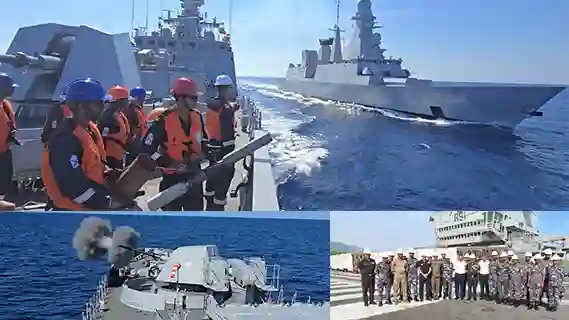
- INS TRISHUL PARTICIPATES IN 24TH EDITION OF INDIA–FRANCE BILATERAL MARITIME EXERCISE VARUNA
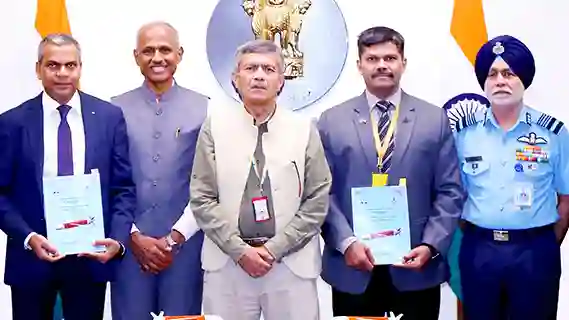
- Major boost to Aatmanirbhar Bharat: MoD signs Rs 811 crore contract with BDL for 160 Satellite Smart Anti Airfield Weapons for IAF
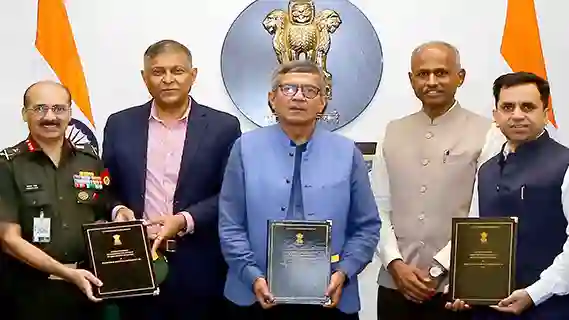
- MoD inks Rs 586 crore contract to procure Auxiliary Power Units for T-72 & T-90 Tanks
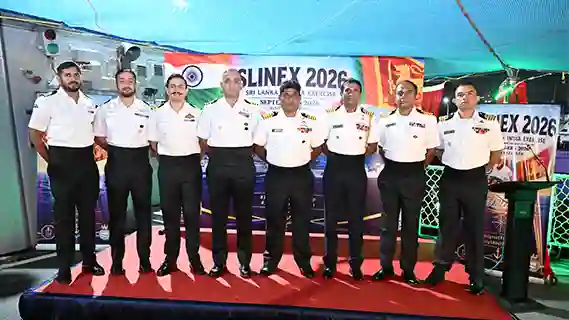
- INDIA – SRI LANKA ANNUAL BILATERAL MARITIME EXERCISE (SLINEX-26)
- Aatmanirbhar Bharat: HAL to hand over LCA Tejas FOC Twin Seater Trainers & HTT 40 Basic Trainer Aircraft to IAF and Dhruv NG helicopters to PHL in the presence of Raksha Mantri & Civil Aviation Minister in Bengaluru
- 43rd Indian Coast Guard Commanders Conference: Raksha Rajya Mantri calls upon ICG to remain prepared for emerging maritime challenges by keeping pace with rapid technological advancements
- INDIAN AIR FORCE DRONATHON – 2026
- INS MYSORE CONCLUDES PARTICIPATION IN THE 4TH EDITION OF EXERCISE SAMUDRA LAKSAMANA AT LUMUT, MALAYSIA
- CLASSROOMS OF CHANGE : Inside the Quiet Educational Revolution Across J&K and Ladakh
- DAC clears capital acquisition proposals worth about Rs 1.10 lakh crore for the defence forces
- Raksha Mantri unveils ‘RAKSHA’ defence diplomacy document outlining India’s strategic roadmap & vision for global partnerships over next 10 years
- Air Marshal Sandeep Thareja takes over as DGAFMS
- Raksha Rajya Mantri Delivers Special Address at Second Annual Trident Lecture of CENJOWS
- AVM SHAKTI SHARMA SCRIPTS HISTORY AS FIRST (NON-MEDICAL) WOMAN TWO-STAR OFFICER IN THE DEFENCE SERVICES
- Raksha Mantri conducts annual performance review of 16 DPSUs; Lauds their noteworthy contribution in record defence production
- AIR MARSHAL KAA SANJEEB TAKES OVER AS AIR OFFICER-IN-CHARGE MAINTENANCE OF THE INDIAN AIR FORCE
- Invest in R&D and technology upgradation while fostering partnerships to become global enterprises & achieve Viksit Bharat goal: Raksha Mantri to MSMEs
- Raksha Mantri approves Transfer of Technology of DRDO-developed missile systems to Indian defence industry to bolster indigenous manufacturing
- INDIAN NAVY SET TO COMMISSION SECOND INDIGENOUS DIVING SUPPORT VESSEL ‘NIPUN’
- Union Home Minister and Minister of Cooperation Shri Amit Shah inaugurates the 9th two-day National Security StrategiesConference-2026 in New Delhi
- Pakistan’s deep state patronage laid bare as UN-designated terror outfit Jaish-e-Mohammed fully restores its Bahawalpur headquarters.
- India and UK conduct 25th Defence Consultative Group Meeting
- India-Japan Joint Press Statement
- Aatmanirbhar Bharat: DDP notifies 6th Positive Indigenisation List of 405 strategically important items
- MoD inks contract with General Atomics Aeronautical Systems, Inc for leasing of two MQ-9B Sea Guardian High-Altitude Long-Endurance Remotely Piloted Aircraft Systems for Indian Navy for 30 months
- INDIAN ARMY CONTINGENT DEPARTS FOR INDIA-THAILAND JOINT MILITARY EXERCISE MAITREE-XV
- India becomes the First Country to establish Anti-Drone Patrolling of Border and Urban areas
- AMCA Engine: Reliance & Rolls-Royce Join Hands for India’s Fighter Engine
- Military modernisation driven by a self-reliant & future-ready defence sector is Govt’s top priority: Raksha Mantri on the eve of 80th Independence Day
- Aatmanirbhar Bharat: MoD inks Rs 1,577 crore contracts for Loiter Munition Systems for Indian Army
- EVE AIR MOBILITY ACHIEVES FIRST TRANSITION FLIGHT MILESTONE, ADVANCING EVTOL PROGRAM TOWARD WING-BORNE FLIGHT
- CHIEF OF THE NAVAL STAFF ON AN OFFICIAL VISIT TO MAURITIUS TO STRENGTHEN BILATERAL MARITIME COOPERATION
- Raksha Mantri chairs meeting of Parliamentary Consultative Committee for MoD on Territorial Army
- DISTRICT-LEVEL FORENSIC MOBILE VAN NETWORK
- ideaForge receives TDB nod for Financial Assistance of ₹151 Crore Under RDI Scheme To Advance Heavy-Lift UAV Platform ‘YETI’
- VICE ADMIRAL AN PRAMOD, AVSM, YSM, ASSUMES CHARGE AS DEPUTY CHIEF OF NAVAL STAFF
- Smt Alka Nangia Arora takes charge as Controller General of Defence Accounts
- AIR MARSHAL TEJPAL SINGH ASSUMES THE APPOINTMENT OF DEPUTY CHIEF OF THE AIR STAFF
- 4th Tri-Services Future Warfare Course set to begin in New Delhi
- Air Marshal Sandeep Thareja appointed as DGAFMS w.e.f. August 31, 2026
- CHIEF OF THE ARMY STAFF LAUNCHES INDIGENOUS XTREME WEATHER GRADE DIESEL
- LAUNCH OF MACHILIPATNAM, THE SEVENTH OF THE MAHE-CLASS ANTI-SUBMARINE WARFARE SHALLOW WATER CRAFT
- Successful development of first indigenous Expendable Turbo Jet Engine of 350 kg thrust class
- INDIAN NAVY COMMISSIONS INS MALVAN, THE SECOND OF THE MAHE-CLASS ANTI-SUBMARINE WARFARE SHALLOW WATER CRAFT
- DRDO inks two major contracts with Industry partners as part of AEW&C MK-II programme
- ideaForge’s Indigenous UAV Fleet Surpasses Landmark One Million Flights Across Critical Missions
- Defence Secretary and Japanese Vice Minister of Defence for International Affairs co-chair 8th India–Japan Defence Policy Dialogue in Tokyo
- Indian Navy commissions Made-in-India advanced stealth frigate INS Mahendragiri in Raksha Mantri’s presence at Visakhapatnam
- Visit of Chief of the Army Staff to Northern Command Concludes
- DRDO conducts successful flight-test of Pinaka Long Range Guided Rocket
- Multilateral Military Exercise Khaan Quest 2026 Concludes
- DAC approves capital acquisition proposals worth Rs 52,000 crore to enhance combat readiness of Defence Forces
- President Confers 105 Distinguished Service Medals at Defence Investiture Ceremony 2026
- IAF CONCLUDES NO.5 WARFARE & AEROSPACE STRATEGY PROGRAMME (WASP)
- Delegation of Financial Powers to DRDO 2026: Raksha Mantri unveils major reform to enhance efficiency, accountability & timely execution of strategic R&D projects
- Indian Army Contingent Displays Operational Readiness and Sporting Spirit at Exercise Khaan Quest 2026
- INDIAN ARMY MARCHING CONTINGENT TO PARTICIPATE IN SEYCHELLES 50TH NATIONAL DAY CELEBRATIONS
- Indian Army Contingent in Full Swing at Exercise Khaan Quest 2026
- INDIAN ARMY CELEBRATES 12TH INTERNATIONAL DAY OF YOGA ACROSS THE NATION
- INDIAN NAVY SET TO COMMISSION THREE INDIGENOUS NAVAL PLATFORMS IN KOLKATA
- MKU Limited and PT Republikorp Sign MoU to Localise Electro-Optics Manufacturing in Indonesia Under TKDN Framework
- DRDO conducts successful flight-test of Long Range Land Attack Cruise Missile
- Lt Gen Dhiraj Seth appointed as Chief of the Army Staff w.e.f. June 30, 2026
- DRDO demonstrates the nation’s next-gen defence capabilities
- Raksha Mantri inaugurates an Advanced Weapon System Complex at DRDL, Hyderabad
- Aatmanirbhar Bharat: MoD inks Rs 449 crore contract for 20 Enhanced Capability Global Navigation Satellite System Jammers for Indian Navy
- President confers 07 Kirti Chakras (02 posthumous), 15 Vir Chakras (03 posthumous) & 29 Shaurya Chakras (01 posthumous) during Defence Investiture Ceremony 2025 (Phase-I)
- Raksha Mantri approves two-fold increase in financial ceiling for Field Commanders to strengthen operational efficiency
- Motorola Solutions to Acquire D-Fend Solutions, an Industry Leader in Counter-Drone Systems
- Raksha Mantri and Australian Deputy Prime Minister & Defence Minister co-chair second India-Australia Defence Ministers Dialogue
- ADMIRAL KRISHNA SWAMINATHAN, PVSM, AVSM, VSM ASSUMES CHARGE AS THE 27th CHIEF OF THE NAVAL STAFF OF INDIAN NAVY
- Raksha Mantri and Australian Deputy Prime Minister & Minister for Defence to hold second India-Australia Defence Ministers Dialogue in New Delhi
- IIT-R Incubated Space Tech Startup BlueWay Horizon Successfully Hot-Fires ALPHA 120N Thruster for Horizon-1 Orbital Return Platform
- Raksha Mantri releases commemorative book on Op Sindoor, chronicling soldiers’ personal testimonies
- Johnnette Technologies Inks Strategic MoU with Munitions India Limited, a Defence Public Sector Undertaking organization for integration of Advanced Warheads on Loitering Munitions and UCAV Weapon Systems
- K9 Warriors Steal the Show at Exercise PRAGATI 2026
- Exercise PRAGATI 2026 in Full Swing at Umroi, Meghalaya
- A nation that manufactures its own weaponry writes its own destiny: Raksha Mantri
- INDIAN ARMED FORCES DELEGATION PARTICIPATES IN SOF WEEK 2026
- Pakistan Sovereignty for Sale: Who Bought It, and at What Price?
- MULTILATERAL EXERCISE PRAGATI 2026 COMMENCES AT UMROI, MEGHALAYA
- Major boost to Aatmanirbhar Bharat: DRDO completes development trials of Unmanned Aerial Vehicle Launched Precision Guided Missile-V3 in Air-to-Ground & Air-to-Air modes
- COAS GENERAL UPENDRA DWIVEDI INAUGURATES SEMINAR ON “SECURITY TO PROSPERITY: SMART POWER FOR SUSTAINED NATIONAL GROWTH”
- Raksha Mantri Shri Rajnath Singh and Vietnam’s Deputy PM & Defence Minister General Phan Van Giang hold bilateral talks in Hanoi
- CINBAX-II 2026 Concludes in Cambodia: Indian Army and Royal Cambodian Army Strengthen Interoperability
- Raksha Mantri and Andhra Pradesh Chief Minister lay foundation stones for AMCA’s Core Integration & Flight Testing Centre and Naval Systems Manufacturing Facility
- Raksha Mantri & Andhra Pradesh Chief Minister to grace foundation stone laying/grounding ceremonies of aerospace & defence projects at Puttaparthi
- TERI Report: As India Tightens Its Belt, Can the Indian Army Lead the Way? Simulator-Based Training Can Save the Armed Forces Over ₹1,000* Crore Annually
- STAGE SET FOR MULTINATIONAL EXERCISE PRAGATI 2026 AT UMROI, MEGHALAYA
- CINBAX-II 2026 in Full Swing: India-Cambodia Troops Train for UN Peacekeeping Operations
- USAGE OF CIVIL POPULATED AREAS BY PAKISTAN FOR MILITARY PURPOSES
- India conducts successful flight-trial of Advanced Agni missile with Multiple Independently Targeted Re-Entry Vehicle system
- DRDO & IAF successfully conduct maiden flight-trial of Tactical Advanced Range Augmentation weapon
- DELIVERY OF PROJECT 17A INDIGENOUS ADVANCED STEALTH FRIGATE MAHENDRAGIRI
- Raksha Mantri holds bilateral talks with Italian Defence Minister in New Delhi
- Indian Army Successfully Conducts Op Netra 1.0, High-Altitude Mega Eye Camp in Leh, Ladakh
- DRDO & Indian Navy successfully conduct maiden salvo launch of Naval Anti-ship Missile-Short Range
- ideaForge inks MoU with Japan’s DMP to Expand Global Footprint in Next-Gen AI Drones
- Homecoming of the Chief of Army Staff to Sainik School Rewa
- Raksha Mantri to lead Indian delegation at SCO Defence Ministers Meeting in Bishkek, Kyrgyzstan
Technical Astra is an authoritative Digital and Print publication on Defence, Civil and Military Aviation, Homeland Security, Space, Missiles, Electronic Warfare, Intelligence and Strategic Affairs.
Recent Post
-
01 Oct 2026INS TRISHUL PARTICIPATES IN 24TH EDITION OF INDIA–FRANCE BILATERAL MARITIME EXERCISE VARUNA
-
23 Sep 2026Major boost to Aatmanirbhar Bharat: MoD signs Rs 811 crore contract with BDL for 160 Satellite Smart Anti Airfield Weapons for IAF
-
21 Sep 2026MoD inks Rs 586 crore contract to procure Auxiliary Power Units for T-72 & T-90 Tanks