By Special Correspondent
HAJINAR, J&K – In the remote valley of Hajinar, winter does not just bring snow—it cuts the village off from the rest of the world for three full months. Nestled right along the border, basic services are hard to come by, and life moves under the unpredictable shadow of geographic and geopolitical realities.
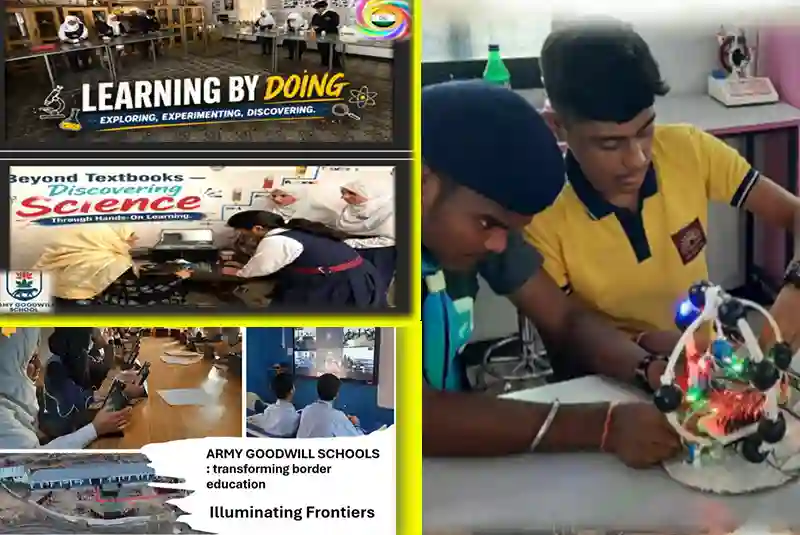
Yet, inside a classroom at Army Goodwill School (AGS) Hajinar, a group of young students isn’t thinking about isolation. They are collaborating on community problem-solving projects, turning textbook concepts into real-world solutions for their village.
For over 25 years, the Indian Army has operated a network of 43 Army Goodwill Schools across Jammu & Kashmir and Ladakh. What began as an effort to provide basic access to schooling in underserved regions has evolved into a life-changing educational engine. These classrooms are no longer just places where children sit at wooden desks; they are space-making environments where ordinary young minds learn to break through extraordinary barriers.
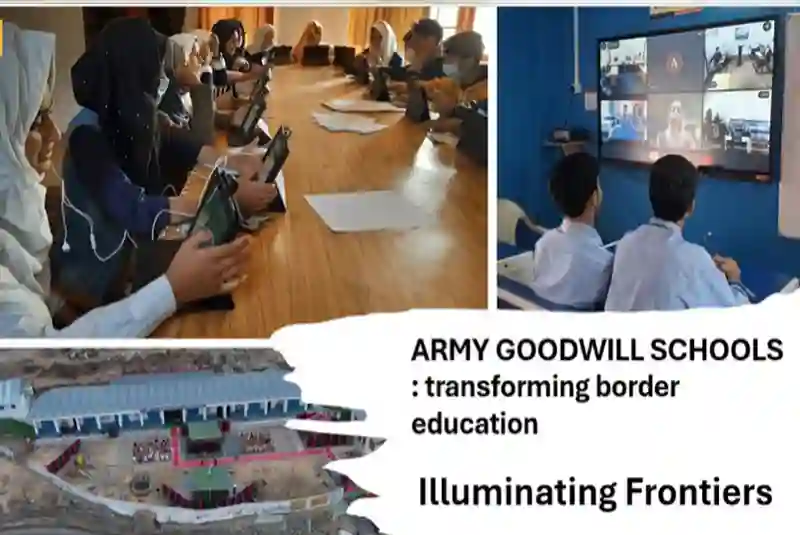
“What began as an effort to provide basic access to schooling in underserved regions has evolved into a life-changing educational engine across the border belts.”
Beyond the Syllabus: Where Confidence Takes Root
When people talk about education in conflict-prone or remote zones, they often focus on numbers and pass percentages. But the real story of these border classrooms is found in the deeply personal transformations of individual children.
Take the story of Falak Fatima, previously an 8th-grade student at AGS Drass, has now passed out from AGS Drass. Bright and thoughtful, Falak spent years paralyzed by severe stage fear and low self-confidence, often keeping quiet during discussions to avoid speaking in front of others. Her story mirrors that of Humaira Anjum, previously a 7th-grade student at AGS Drass, is currently studying in class 8 at AGS Drass. who was so reserved that she routinely held back her ideas despite her strong academic potential.
In traditional, high-pressure environments, quiet students like Falak and Humaira can easily fall through the cracks. But through structured mentorship, activity-based workshops, and supportive presentation exercises, both girls found their voices. Today, they participate actively in classroom discussions and step onto stages with poise—a subtle shift that alters the trajectory of a child’s entire life.
Then there are students like Anikait who has passed out this year (March 2026) from AGS Murgund. Once labelled as someone who was “good at nothing,” he drifted through his early school years with little sense of purpose. Through patient guidance and personalized encouragement, he discovered his own strengths, proving that a supportive environment can rewrite a young person’s self-belief.
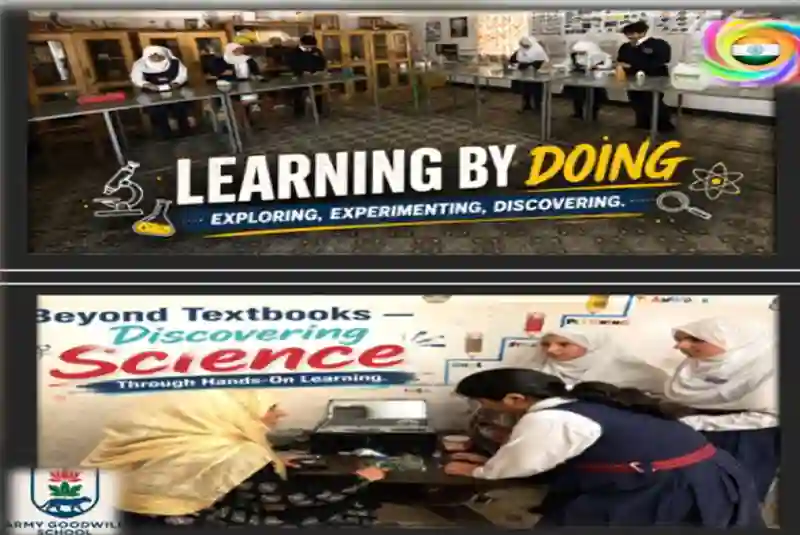
Students at an Army Goodwill School engage in a collaborative classroom exercise, benefiting from modern interactive learning modules.
Fostering Innovation in Border Belts
The modern vision of Army Goodwill Schools goes beyond standard textbook learning. Recognizing that young minds in mountain valleys deserve the same exposure as their urban peers, institutions across the network are opening doors to modern innovation.
At AGS Wuzur, the school introduced an Innovation Club specifically to bridge the gap between theoretical knowledge and practical experimentation. The club gives students a physical space to collaborate, tinker, and build projects outside the confines of the traditional syllabus.
This hands-on culture is cultivating young inventors across the region:
- • Student-Led Solutions: At Goswami AGS Hanzik Sharifabad, 10th-grader Danish Ahmad Mir, who is in Hanzik only, turned his natural curiosity into practical creative solutions, evolving from an inquisitive young learner into a recognized student innovator.
- • Interactive Classrooms: At AGS Krusan, a partnership with the Bharti Airtel Foundation introduced child-cantered Teaching–Learning Materials (TLM), replacing passive listening with active, hands-on activities.
- • Metropolitan Exposure: To widen their horizons, students and teachers regularly take part in residential exposure visits. Programs like PRAGYAAN bring students from Kashmir division straight into advanced academic ecosystems like IIT Jammu and premier research facilities like CSIR-IIIM, giving them firsthand experience in modern scientific research.
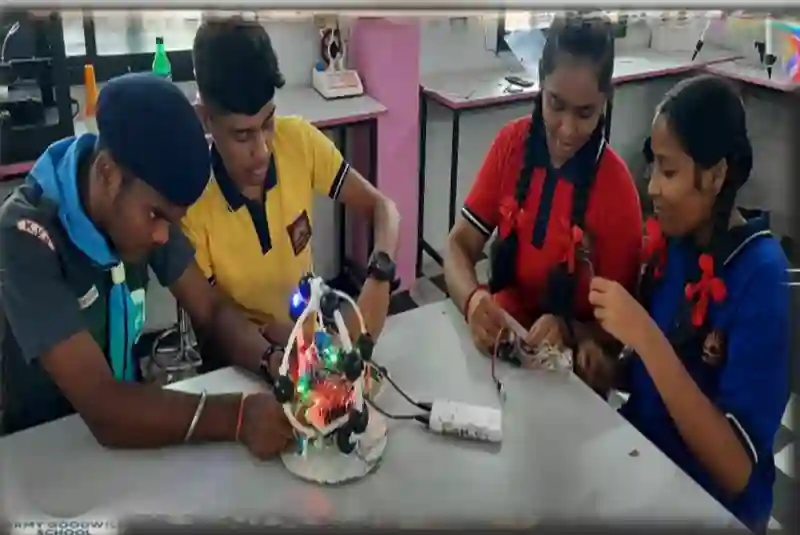
Students demonstrating an innovation project during an interactive science workshop hosted at an AGS campus.
The Ripple Effect Across Communities
The true impact of these 43 schools isn’t contained within their perimeter walls. When a child from a remote village learns computer science, gains the confidence to speak publicly, or visits a top university, the entire neighbourhood takes notice.
Older siblings become mentors, parents become advocates for equal education, and younger children grow up believing that geographic location does not limit their ambitions.
From the high-altitude cold deserts of Drass to the remote valleys of Hajinar and Wuzur, these schools are providing something far more enduring than routine instruction. They are building a foundation of confidence, curiosity, and resilience—proving that when you give children the tools to innovate and believe in themselves, they will build their own brighter futures.