With nearly 75% of capital procurement now directed to Indian vendors, India’s defence spending is decisively strengthening Make in India and reducing import dependence. This shift is also opening the door for newer collaborations that bring frontier technologies into the sector, while giving a boost to advanced research and prototyping. At the same time, the Army is undergoing large-scale capability enhancement, with similar momentum across the Navy and Air Force, signalling the possibility of higher defence allocations ahead.
For domestic materials science companies, the ask from this year’s budget would be higher spends coupled with smarter, targeted support that reflects the realities of defence-grade development.
At the top of the wishlist is enhanced allocation towards materials R&D and prototyping. This includes a dedicated corpus for defence materials innovation, funding for university–industry research programmes, and rapid prototyping support for materials qualification. Such measures can shorten development cycles, strengthen IP creation, and accelerate the transition from lab research to deployment.
Equally critical is funding to strengthen India’s materials qualification infrastructure. Capex support to set up and modernise shared testing and certification facilities, grants to expand specialised ballistic, aero-thermal, and high-strain rate labs, and subsidies for global-standard accreditations would significantly reduce dependence on limited government facilities and lower time-to-qualification for indigenous materials.
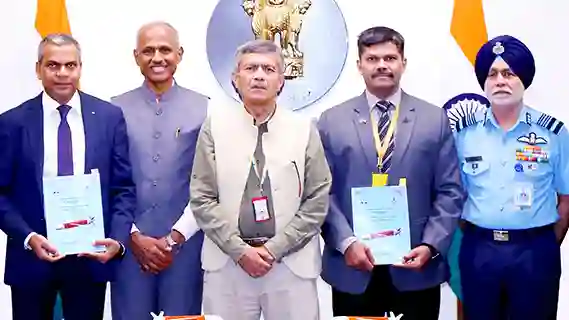
Capex allocations towards technology transfer to private entities like CUMI through partnership with DRDO can be productively utilised to energise the entire ecosystem. MSME partners working with CUMI will also benefit from such a boost in spends towards greater innovation and knowledge sharing, which will generate further employment.
A future-ready defence ecosystem must look beyond platforms to the materials that enable performance, survivability, and resilience. Targeted support in this area will be central to self-reliance, long-term strategic strength, national security & preparedness, as well as global competitiveness.
Subbu Venkatachalam, Head of Defence & Aerospace, Carborundum